-

20+Years of Experience
-

Tele-videoConsultation Facility
-

20+ Years of Experience
-

25K+ Highly Satisfied Patients
-

99% Patient Care Satisfaction
-

State of the Art GERD Hospital
Advanced Treatment For Achalasia Cardia At Adroit Speciality Hospital: Restoring Your Swallowing Comfort
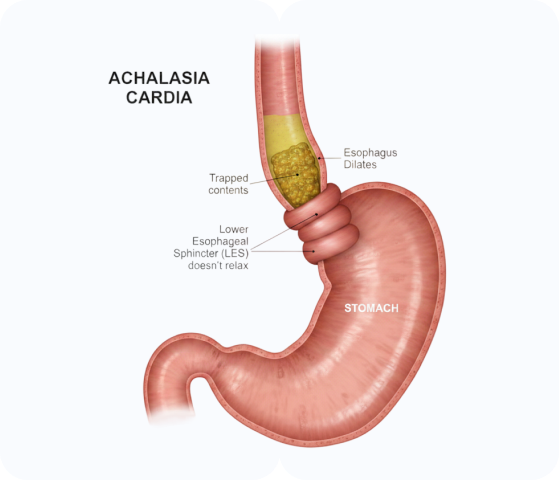
Achalasia Cardia is a rare swallowing disorder in which the nerves of the esophagus gradually lose function. This affects the movement of food from the food pipe into the stomach and causes two major problems. The oesophageal muscles do not contract properly, and the lower oesophageal sphincter, also called LES, does not relax when you swallow.
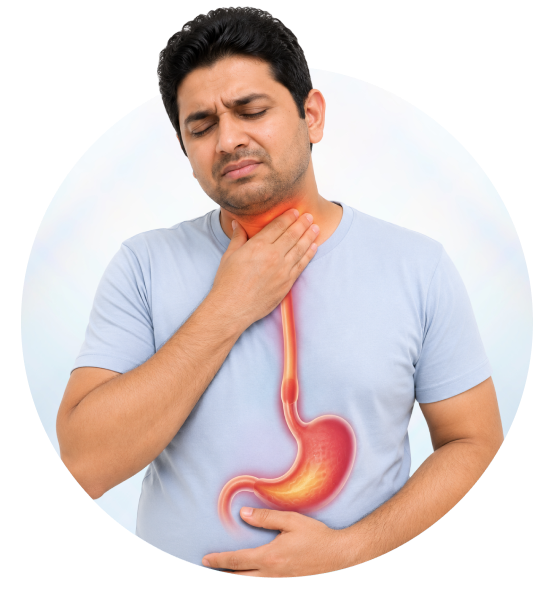
As a result, food and liquids may remain stuck in the esophagus, causing swallowing difficulty, chest discomfort, regurgitation, cough, weight loss and food or saliva buildup. Because symptoms can look similar to other digestive conditions, timely medical evaluation is important.
At Adroit Speciality Hospital, achalasia cardia treatment in India is planned after detailed evaluation. Our team focuses on identifying the type of achalasia, the level of oesophageal dilatation and the most suitable treatment option for long-term symptom relief.
Accurate Diagnosis At Adroit Speciality Hospital: The Foundation Of Effective Treatment
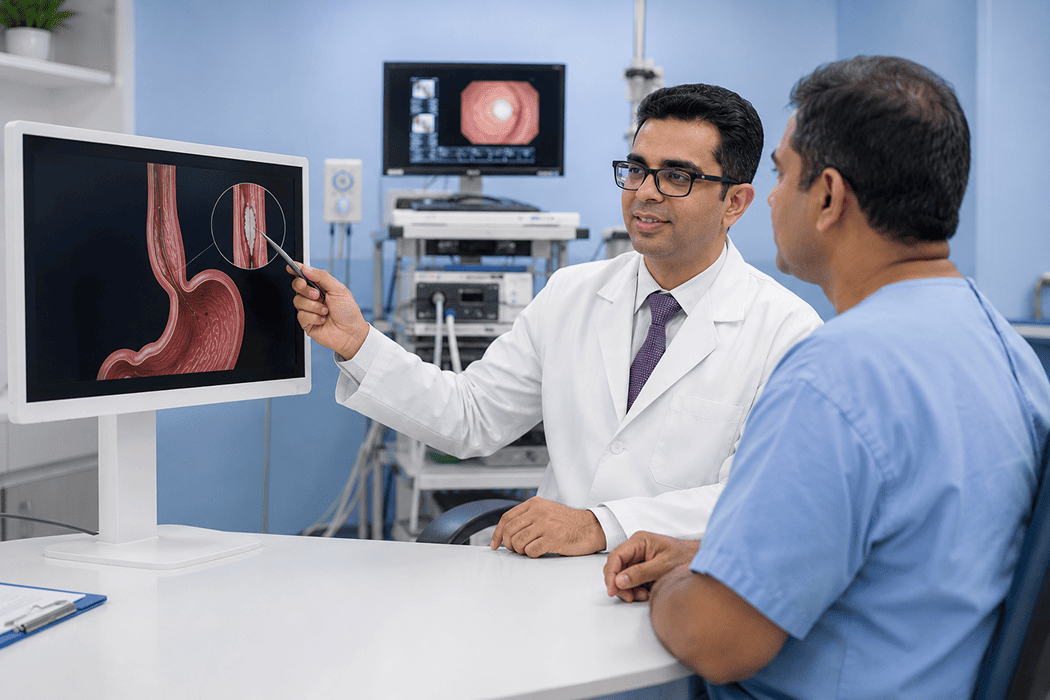
Achalasia Cardia can be challenging to diagnose because its symptoms may mimic reflux, throat problems or other digestive disorders. If swallowing difficulty, regurgitation or food sticking in the chest continues, it is important to seek specialist care.
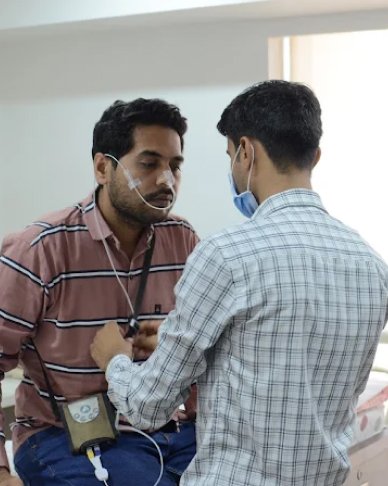
Adroit Speciality Hospital offers advanced evaluation to confirm the diagnosis and plan the right path of treatment. Accurate testing helps the team decide whether laparoscopic surgery, endoscopic treatment or another approach is best suited for the patient.
- Oesophageal manometry
- Barium or dye swallow test
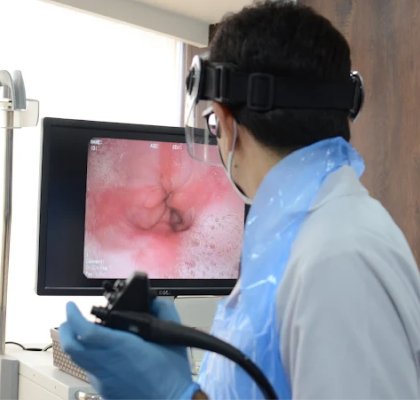
- Upper GI endoscopy

Best Achalasia Cardia Treatment in India
Adroit Speciality Hospital is a leading centre for achalasia cardia treatment in India, providing advanced diagnosis, expert surgical care and dedicated follow-up for patients with swallowing disorders. We offer personalised treatment plans based on the type of achalasia, oesophageal condition, age, overall health, and previous treatment history.
Treatment options include:
- Medical management for selected patients with mild symptoms.
- Endoscopic Balloon Dilatation to widen the lower oesophageal sphincter.
- POEM (Peroral Endoscopic Myotomy), a minimally invasive endoscopic procedure.
- Laparoscopic Heller’s Cardiomyotomy with Dor Fundoplication, the gold standard surgical treatment for suitable patients, offering effective symptom relief with reduced risk of acid reflux and excellent long-term outcomes.
Laparoscopic Heller’s Cardiomyotomy With Dor Fundoplication
This minimally invasive achalasia cardia surgery involves carefully cutting the tight muscle at the lower end of the food pipe so food can pass more smoothly into the stomach. The procedure is performed under direct vision, allowing precise muscle division.
If a small defect occurs in the inner lining of the food pipe during surgery, it can be repaired immediately. An endoscopic check is also performed during surgery to confirm that the valve has opened adequately and that there is no perforation.
After the muscle is opened, the upper part of the stomach is wrapped over the treated area. This is called Dor Fundoplication, which helps reduce the risk of acid reflux after surgery. For suitable patients, especially when treated early, this procedure offers excellent long-term symptom relief, improving swallowing, reducing regurgitation and enhancing overall quality of life.

Peroral Endoscopic Myotomy, Also Known As POEM
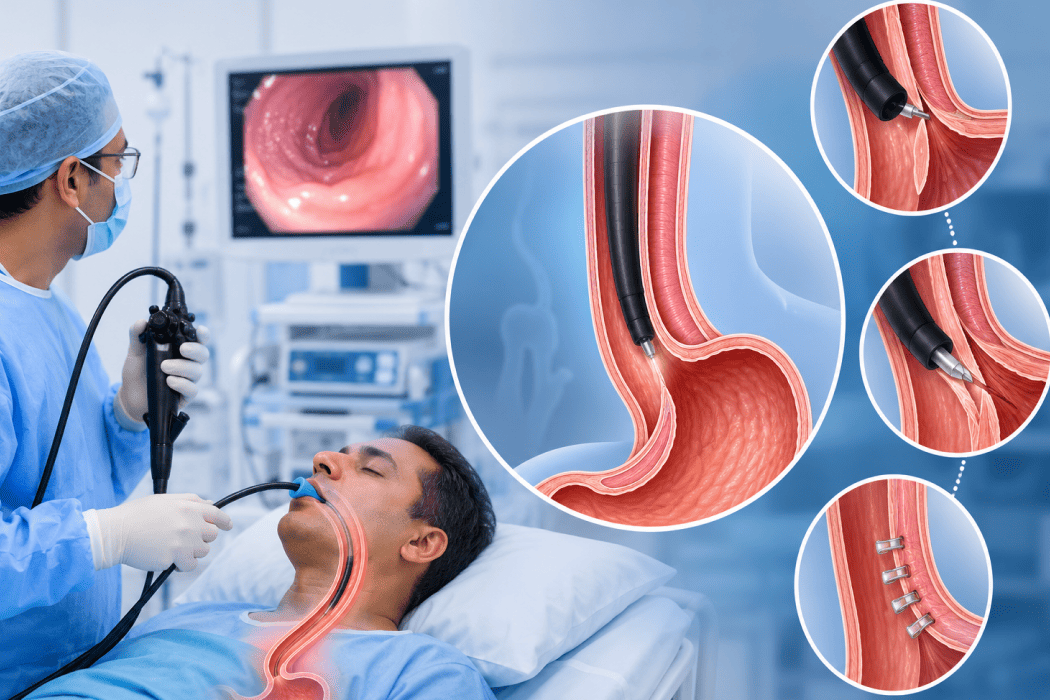
POEM is a minimally invasive endoscopic procedure in which an endoscope and specialised instruments are passed through the mouth. A small opening is made in the inner lining of the esophagus, and the muscle at the lower oesophageal sphincter is divided under direct vision.
The inner lining is then closed with endoscopic clips. Symptom relief may be comparable to laparoscopic surgery in selected patients, but POEM is a newer technique and long-term outcomes continue to be studied.
The main limitation of POEM is that it does not include an anti-reflux procedure such as fundoplication. Because of this, the risk of acid reflux can be higher, and some patients may need long-term acid-suppressing medicines after treatment.
Regular And Dedicated Follow-Up: A Long-Term Commitment
Achalasia is a chronic condition. Current treatments can improve swallowing and reduce symptoms, but they cannot stop or reverse the loss of nerve cells in the esophagus. They also cannot restore normal peristalsis, which is the rhythmic muscle movement that pushes food towards the stomach.
For this reason, long-term and lifelong follow-up is essential for patients treated for achalasia. Regular reviews help track symptom control, treatment response, reflux, food retention and oesophageal dilatation. Follow-up also helps detect complications early and supports better long-term comfort.
At Adroit Speciality Hospital, our team provides regular, meaningful follow-up with empathy and clinical consistency. This continuity of care is one of the reasons patients choose Adroit Speciality Hospital for achalasia cardia treatment in India.
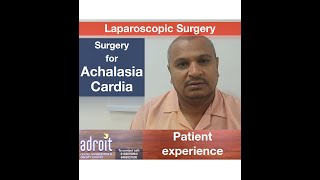
Achalasia Cardia Treatment Insights & Treatment Videos

25K+
Happy patients
Why Choose Adroit Hospital for Achalasia Cardia Surgery?
Adroit Speciality Hospital is a centre of choice for achalasia cardia patients because it combines advanced evaluation, surgical expertise, modern technology and dedicated long-term follow-up.

Expert Medical Staff
Achalasia patients are assessed by a team experienced in gastrointestinal, laparoscopic, endoscopic and reflux-related conditions.

High Success Rates
Treatment planning is based on manometry findings, dye swallow results and patient-specific factors, helping improve the chance of lasting symptom relief.

Advanced Technology
The hospital offers oesophageal manometry, 24-hour pH impedance study, upper GI endoscopy and advanced minimally invasive treatment options.

Comprehensive Care
Patients receive support from diagnosis to treatment, recovery, reflux management and long-term follow-up.

Dr. Chirag Thakkar
M.S., F.R.C.S. (Edinburgh, U.K), FARIS
Senior Consultant GI, Bariatric and Robotic Surgeon
Director - ADROIT Speciality Hospital, Bariatric|Digestive|Hernia surgery
Dr Chirag Thakkar specialises in Bariatric, Acid reflux, GERD, and Hernia surgery, both by Laparoscopic and Robotic methods. He is the founder director of ADROIT Speciality Hospital for Bariatric, hernia, and digestive surgery.
Have Questions Or Need Assistance?
Our team is here to help you understand your symptoms, diagnosis and treatment options. Reach out for expert guidance and personalised support for achalasia cardia treatment in Ahmedabad and India.
get in touch
Fill in the details below and our team will get back to you shortly.
What Our Patients Say
Hear from patients whose lives have been transformed through expert care at ADROIT Speciality Hospital.


Real Patient Experiences with Achalasia Cardia Surgery
Frequently Asked Questions
In achalasia cardia, the nerve cells of the food pipe (esophagus) gradually become damaged, leading to two major problems that make swallowing difficult.
First, the muscles of the esophagus do not contract normally, so swallowed food is not pushed efficiently into the stomach. Second, the lower esophageal sphincter (LES), the valve between the food pipe and the stomach, fails to relax properly during swallowing. As a result, food and liquids cannot pass easily into the stomach.
Over time, food, saliva, and fluids accumulate above the tightly closed LES, causing the food pipe to gradually stretch (dilate) and enlarge.
The hallmark symptom of achalasia cardia is difficulty swallowing (dysphagia). Initially, patients may have trouble swallowing solid foods, but as the condition progresses, swallowing liquids also becomes difficult.
Common symptoms of achalasia cardia include:
- A sensation of food or liquids getting stuck in the chest after swallowing.
- Chest pain or discomfort while eating.
- Regurgitation of undigested food or saliva, especially when lying down.
- Coughing, choking, or liquid coming out through the nose during sleep due to regurgitation.
- Heartburn, inflammation, or ulceration of the food pipe (esophagus) caused by retained food.
- Gradual and unexplained weight loss.
Achalasia cardia usually develops slowly and worsens over time. Because the symptoms progress gradually, many patients adapt by eating more slowly or changing their posture, such as lifting the neck or throwing the shoulders back, to help food pass into the stomach. As a result, medical attention is often delayed until the symptoms become more severe.
Patients with long-standing achalasia cardia also have an increased risk of developing esophageal cancer. Early diagnosis, timely treatment, and regular follow-up are important to reduce complications and maintain long-term esophageal health.
The exact cause of achalasia cardia is not fully understood. However, researchers believe that several factors may contribute to the development of the condition, including:
- Autoimmune response: The body’s immune system may mistakenly attack the nerve cells of the food pipe (esophagus), leading to loss of normal esophageal muscle function.
- Viral infections: Certain viral infections, including some herpes viruses, are thought to trigger an abnormal immune response in susceptible individuals, although this has not been conclusively proven.
- Genetic predisposition: While achalasia cardia is not usually an inherited disorder, some people may have a genetic susceptibility that increases their risk of developing the disease.
Achalasia cardia is most likely caused by a combination of these factors rather than a single identifiable cause.
Yes, achalasia cardia can be treated without surgery in selected patients. Non-surgical treatment options include medications, endoscopic Botox injections, and pneumatic balloon dilatation. However, medications and Botox injections generally provide only temporary symptom relief and are not considered effective long-term treatments. Therefore, they are not routinely recommended for most patients.
The primary non-surgical treatment is pneumatic balloon dilatation.
Pneumatic balloon dilatation is an endoscopic procedure in which a specially designed balloon is positioned across the lower esophageal sphincter (LES) and inflated to stretch and split the tight sphincter muscle
Compared with surgery, pneumatic balloon dilatation is a less precise treatment and generally has lower long-term success rates. The LES may become tight again over time, and nearly one-third of patients require repeat balloon dilatation.
The procedure carries a 2–4% risk of esophageal perforation (a tear or hole in the food pipe), which usually requires emergency surgery. Since balloon dilatation does not include an anti-reflux procedure, patients also have a significantly higher risk of developing acid reflux after treatment.
Peroral Endoscopic Myotomy (POEM) is a minimally invasive endoscopic procedure used to treat achalasia cardia. Unlike laparoscopic surgery, POEM is performed entirely through the mouth without any external incisions.
During the procedure, the surgeon passes an endoscope through the mouth into the esophagus and creates a small incision in the inner lining of the food pipe. The tight lower esophageal sphincter (LES) muscle is then carefully divided under direct vision to allow food and liquids to pass into the stomach more easily. The incision is finally closed using endoscopic clips.
POEM provides relief from swallowing difficulty, with short-term results comparable to laparoscopic Heller’s myotomy. However, as it is a relatively newer procedure, long-term outcome data are still being evaluated.
Patients are usually admitted on the day of surgery or the night before the procedure. To prepare for surgery, a clear liquid diet is recommended for two days before POEM. This helps ensure that the food pipe is free of retained food, allowing the procedure to be performed safely.
Most patients are able to get out of bed and walk within a few hours after surgery. A liquid diet is usually started about two days after the procedure, followed by a soft diet over the next few days. These temporary dietary restrictions allow the incision in the inner lining of the esophagus to heal properly.
Most patients experience improvement in swallowing after POEM. However, because the procedure does not include an anti-reflux procedure (fundoplication), the risk of developing acid reflux is relatively high, occurring in approximately 40-60% of patients. Those who develop reflux may require long-term acid-suppressing medications.
Heller cardiomyotomy with partial fundoplication (Dor or Toupet), performed using robotic or laparoscopic minimally invasive surgery, is considered the gold standard surgical treatment for achalasia cardia. The procedure is performed through a few small incisions in the abdomen using a high-definition camera and specialized surgical instruments.
During a Heller cardiomyotomy, the surgeon carefully divides the tight lower esophageal sphincter (LES) muscle at the lower end of the food pipe (esophagus). This relieves the obstruction and allows food and liquids to pass more easily into the stomach. Since the procedure is performed under magnified vision, the muscle division is highly precise. If a small tear occurs in the inner lining of the esophagus during surgery, it is identified immediately and repaired during the same operation without affecting the overall outcome.
An intraoperative endoscopy is routinely performed to confirm that the LES has been adequately opened and to ensure there is no injury to the esophagus.
After the cardiomyotomy, the upper part of the stomach is partially wrapped around the lower end of the esophagus to create a partial fundoplication (Dor or Toupet). This anti-reflux procedure helps reduce the risk of acid reflux after surgery while maintaining the improved passage of food into the stomach.
No. Achalasia cardia is generally not an inherited genetic disorder and does not usually run in families. Most cases occur occasionally without a known family history.
No. Achalasia cardia does not cause heart disease or damage the heart. However, chest pain caused by achalasia can sometimes resemble cardiac chest pain, so proper evaluation is important to rule out heart-related conditions.
Yes, in rare cases, untreated achalasia cardia can become life-threatening. Severe food or liquid retention in the esophagus may regurgitate into the windpipe (trachea), leading to aspiration, choking, aspiration pneumonia, or serious lung infections.
Achalasia cardia can be distinguished from esophageal cancer using a combination of investigations, including upper GI endoscopy, CT scan, esophageal manometry, and biopsy when required. These tests help establish an accurate diagnosis and exclude malignancy.
If left untreated, achalasia cardia can lead to several complications, including:
- Esophagitis (inflammation or fungal infection of the food pipe)
- Bleeding from the esophagus
- Aspiration pneumonia
- Recurrent lung infections
- Increased risk of esophageal cancer over the long term